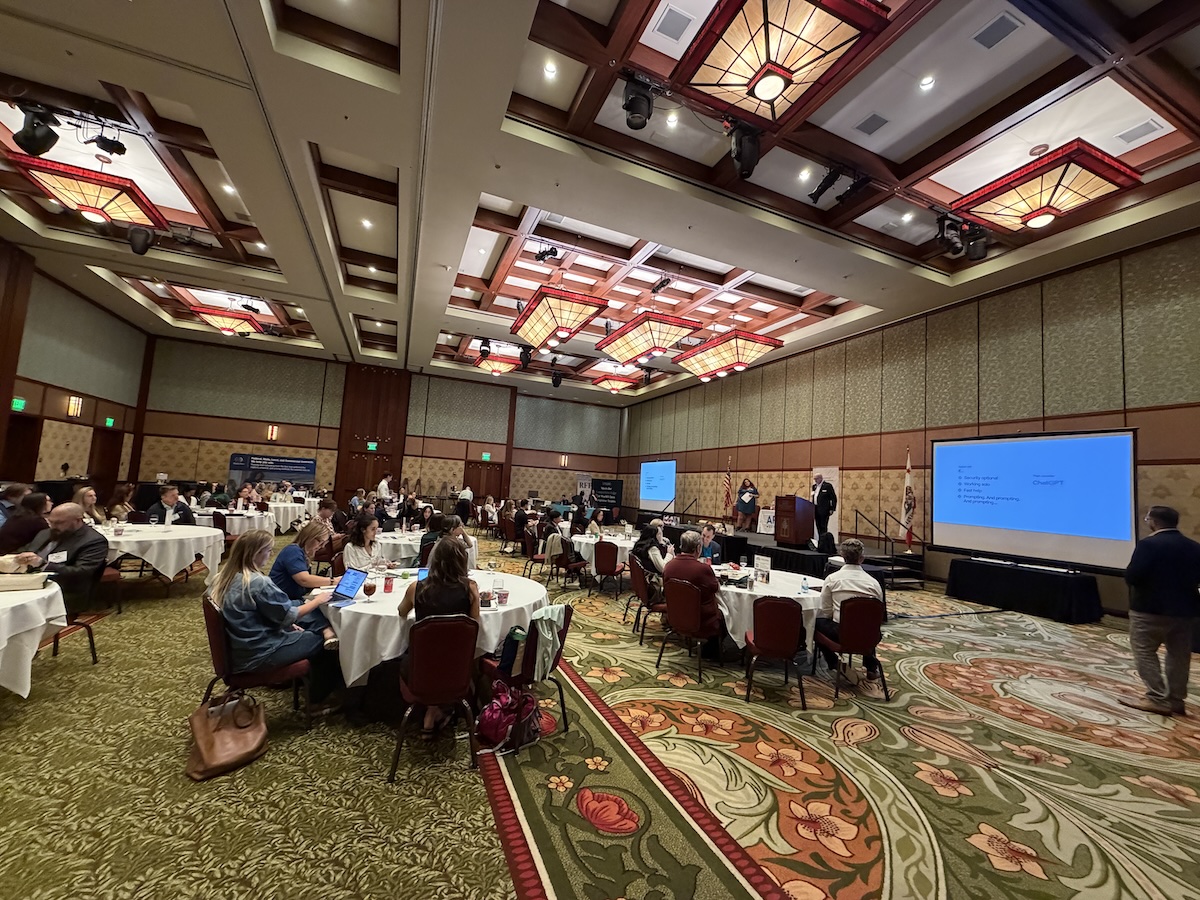
The most useful tip we heard: use AI as a mock evaluator.
The tip we're stealing
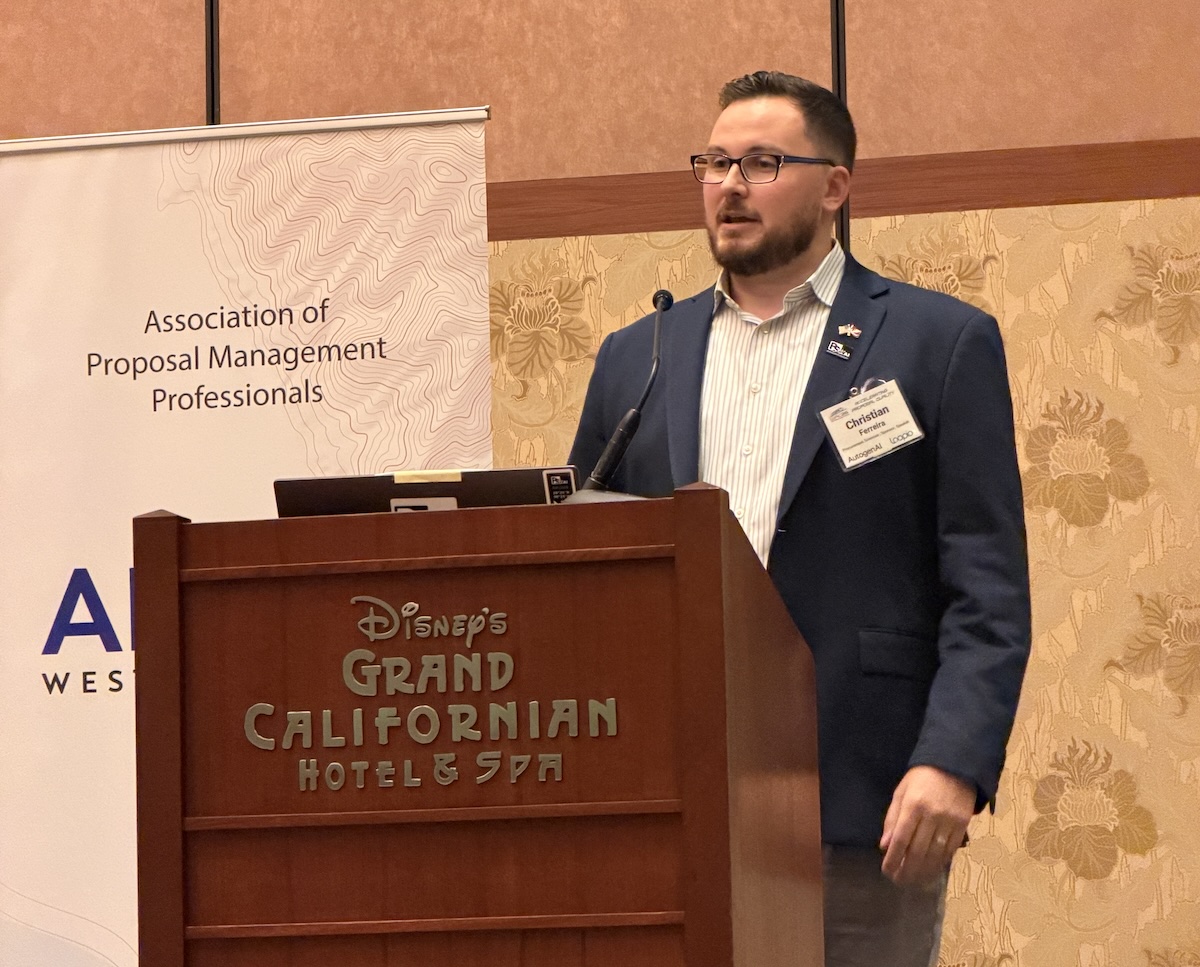
Christian Ferreira of Procurement Sciences got big laughs with AI-generated videos of a bid team leader who hands far too much over to AI. He also provided our favorite tip of the conference: give AI your draft and have it score the proposal the way the buyer would.
Christian Ferreira of Procurement Sciences at APMP WRC 2026
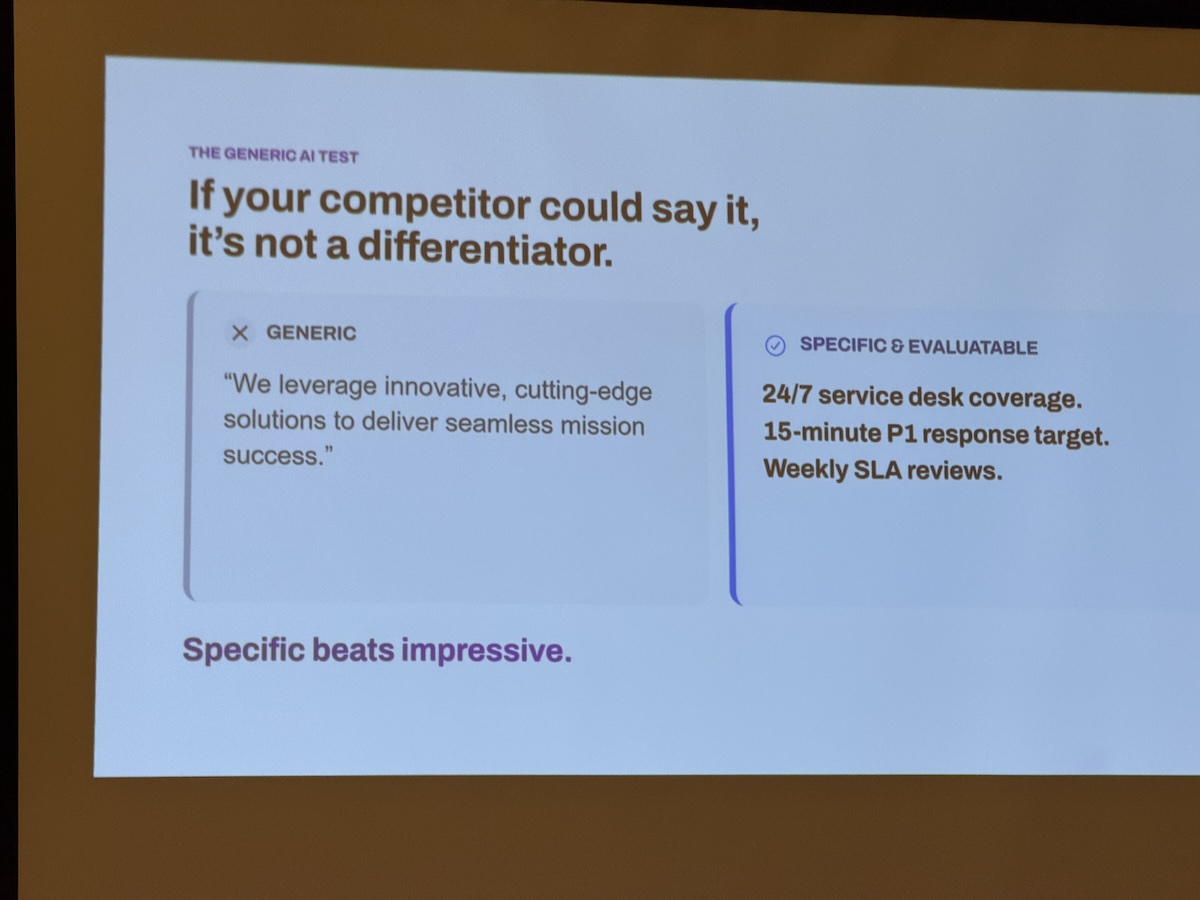
Another nugget was on differentiators – as a marketer, this really resonated and is so commonly ignored. Buzz words mean absolutely nothing to evaluators.
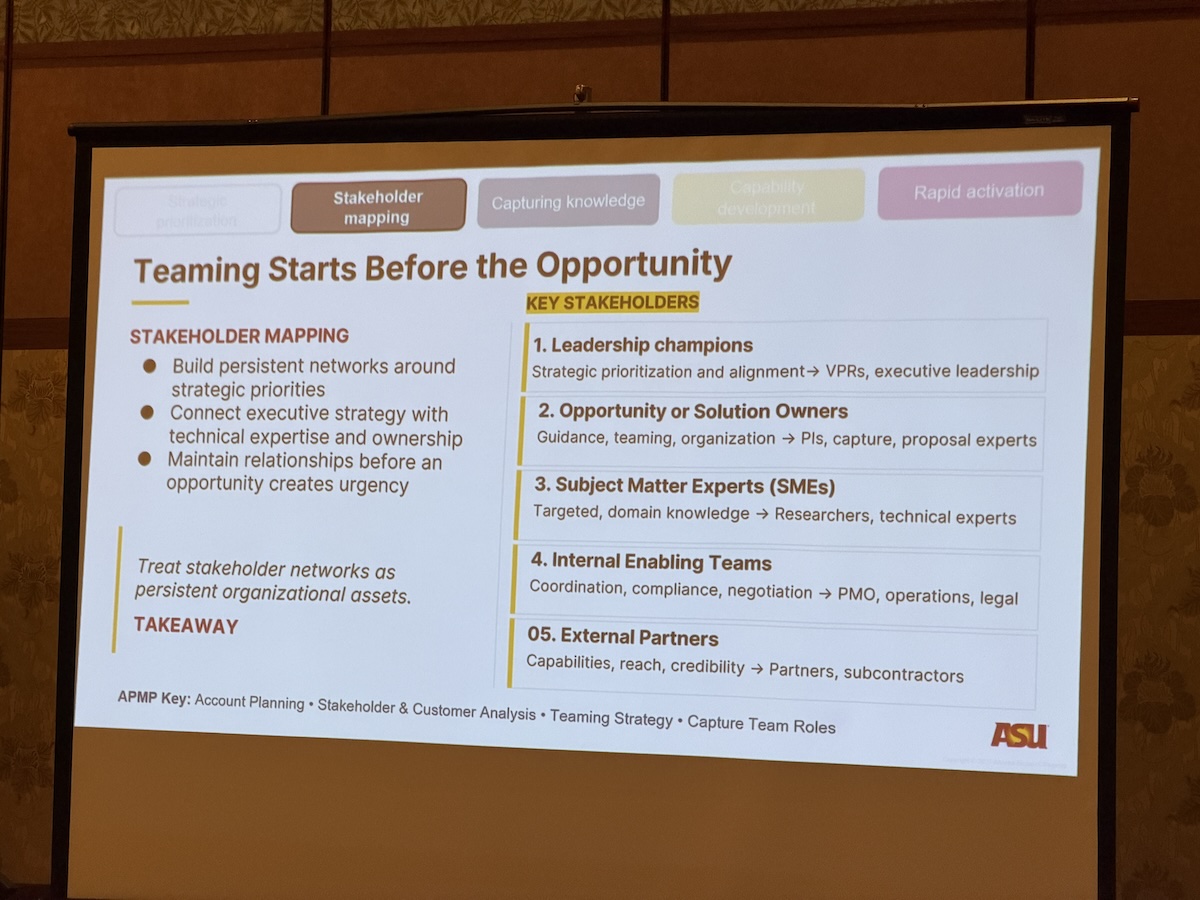
Last but not least, the ASU panel had this is super valuable slide on a topic we're very passionate about at Yappy – stakeholder mapping!
Who else was on stage
Chip Schaller, AutogenAI: a Reclaim, Reinvest, Influence model for putting the time AI frees up into strategic work.
Tammy Holzer: AI can write your proposal, but it can't win it. Win themes built from sales and customer intelligence have to come first.
Arizona State University and Haley & Aldrich panel: moving proposal work upstream with a five-step readiness model.
Mike Parkinson: visual solution architecture, so evaluators get your value fast.
Becky Ellison, Middle of Six: proposal design, plus MacGyver hacks for when production goes sideways.
Career panel: how proposal pros move into leadership and capture roles.
Loopio and AutogenAI were Platinum sponsors. pWinAI, Rohirrim and Shipley Associates were Gold, and Procurement Sciences joined us at Silver (full list).
Loopio also brought one of the most practical sessions. Amy-Louise Tracey covered change management for proposal teams: building buy-in for new tools and processes, handling resistance, and making the change stick. With so many teams rolling out new tools right now, it was a useful reminder that adoption is the hard part.
Why we were there
Proposal and capture teams are who we back on big deals. We make sure the people evaluating their bids have already heard why they should win, during the evaluation period when most bidders go quiet.
That's what the survey is about too: how much of the evaluation bid teams can actually see.
What's in the report
The survey asked proposal, capture, BD and marketing pros how they measure and explain bid results. A few of the questions:
What's your win rate, and how do you calculate it: by number of bids, by contract value, or both?
When you don't win, what still counts as success? Making the shortlist, strong evaluator scores, a useful debrief, keeping an existing client?
What counts as failure? Losing a bid you scored well on, losing to the incumbent, or losing without learning why?
How often do you lose bids you scored well on, and what decided them?
How many people on a typical evaluation committee has your team actually met?
Who owns how the client sees you during a pursuit?
Which ways of influencing a client during a pursuit are fair game?
After a loss, what do you most wish you knew?
A sneak peek at what we found:
Win rates are all over the map. 9 of 26 respondents report a win rate of 50% or more, while 8 sit under 30%.
There's no standard way to measure it. 12 of 26 track win rate by both number of bids and contract value, 8 by number of bids only, and 4 don't formally calculate it at all.
20 of 26 respondents said losing without learning why counts as failure. That was the top answer.
Half have met only one or two people on a typical evaluation committee.